TL;DR:
Pennsylvania’s top utility companies in 2026 stand out through reliable service, smart infrastructure upgrades, and strong customer support. The best electric and gas companies keep the lights on during storms, respond quickly to outages, and offer competitive energy rates. Companies like City Power and Gas – Electric and Gas Company in Pennsylvania, focus on what matters most – keeping your power flowing and your bills manageable.
Pennsylvania residents are getting pickier about their utility providers, and honestly, can you blame them? When you’re paying over $150 monthly for electricity, you want to know your electric company actually deserves your business. The thing is, rating utility companies isn’t just about who has the lowest rates (though that helps). It’s about reliability, customer service, and whether they can keep your power on when a storm rolls through.
Let’s think about this – what actually makes a utility company “top rated” in 2026? The Pennsylvania Public Utility Commission tracks specific metrics that tell you which companies are doing things right. You might think it’s complicated, but it really comes down to a few core factors.
How Pennsylvania Rates Your Electric and Gas Company
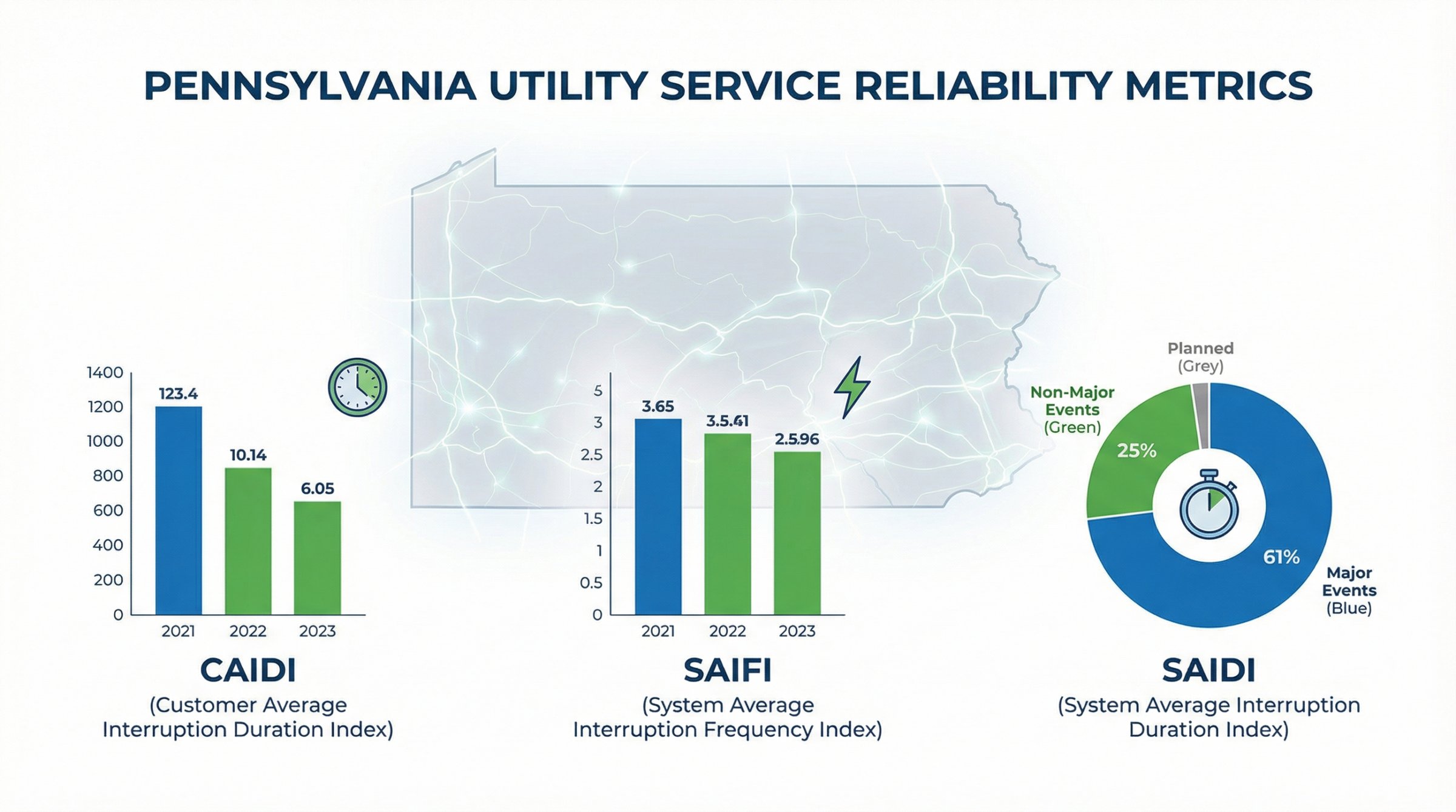
The state uses a straightforward system to measure utility performance. Companies report data quarterly, and these numbers tell the real story about service quality.
CAIDI (Customer Average Interruption Duration Index) measures how long it takes to get your power back after an outage. Think of it as the “how fast do they fix things” score. Companies with lower CAIDI numbers are getting people back online faster.
SAIDI (System Average Interruption Duration Index) tracks total outage time per customer over the year. Let’s say you lose power three times – SAIDI adds up all those minutes. Lower numbers mean less time sitting in the dark.
SAIFI (System Average Interruption Frequency Index) counts how often outages happen. Some companies might fix things quickly but have frequent problems. SAIFI catches that pattern.
Here’s what you can’t figure out from these numbers alone – context matters. A company serving rural areas faces different challenges than one in Philadelphia. Weather plays a huge role too. That’s exactly why the PUC looks at multiple factors before handing out ratings.
 What Customers Actually Care About
You’re not looking at spreadsheets when your power goes out at 2 AM. You want someone to answer the phone and give you real information. Customer satisfaction surveys show this matters as much as technical performance.
The best natural gas and electric companies in Pennsylvania nail the basics – polite call center staff, reasonable wait times, and actual solutions to problems. City Power and Gas – Electric Company in Pennsylvania, and other top providers understand that good service means treating customers like people, not account numbers.
From what you can tell, companies with higher satisfaction scores share common traits. They offer multiple payment options, clear billing statements, and don’t make you wait 45 minutes on hold. These might sound like low bars, but you’d be surprised how many energy providers struggle with simple stuff.
The Deregulated Market Changes Everything
Pennsylvania’s energy market works differently than most states. You can choose your electricity supplier, but not your distribution company. Think of it like this – the electric utility company maintains the wires and poles (you’re stuck with them based on location), but you can shop around for who actually supplies your power.
Currently, major utilities serve specific regions:
- Duquesne Light Company
- Metropolitan Edison Company
- PECO
- PENELEC
- PennPower
- PPL Electric Utilities
- West Penn Power
You might be wondering why only 20% of customers actually shop for better electricity rates. Part of you thinks it’s because the process seems confusing. Another part wonders if people just don’t realize they could save money. The truth is probably both.
City Power and Gas operates as an energy supplier in pennsylvania market, offering competitive rates to customers who want options beyond their default utility. The deregulated system creates opportunities for savings, but only if you actually compare energy rates in PA.
Real Costs and What You’re Paying
Let’s be upfront about something – Pennsylvania’s average electric bill sits around $152 monthly. That’s based on typical usage of 791 kWh at roughly 19.31 cents per kWh. Your actual bill depends on usage, but these numbers give you a baseline.
Natural gas costs vary by season and supplier. Companies offering combined electric and gas service sometimes provide better deals than separate providers. This surprised you at first, but it makes sense – bundling reduces overhead costs.
When comparing energy providers, look beyond the advertised rate. Some plans have hidden fees or higher costs after promotional periods end. The best gas and electric companies show you the total cost upfront, not just the flashy intro rate.
Infrastructure Investment Separates Leaders from Laggards
You used to think all utility companies maintained their equipment about the same. Reading industry reports taught you something you didn’t expect – the gap between top performers and average companies is massive.
FirstEnergy is dumping $5.5 billion into grid improvements in 2025 alone. That’s part of their Energize365 program, a $28 billion initiative running through 2029. Companies making these investments see fewer outages and faster repairs. The numbers back this up – their reliability metrics consistently outperform companies that defer maintenance.
Essential Utilities (operating as Aqua and Peoples brands) serves 5.5 million customers across nine states. They’ve earned recognition for environmental responsibility and customer engagement. What’s interesting here is how they balance infrastructure spending with keeping rates reasonable.
Aging infrastructure creates real problems. Advanced grid tech helps prevent some outages, but when severe weather hits, damage can be more complex to repair. This is messier than you initially thought – better technology doesn’t always mean faster fixes.
What Challenges Are Utility Companies Facing?
The technical details here get beyond what you know, but experts debate several major issues facing Pennsylvania’s energy sector in 2026.
Growing Demand: Data centers and manufacturing facilities need massive amounts of power. Recent capacity auction results showed a 630% increase in payments to power plant owners, yet generation capacity isn’t keeping pace. This threatens both reliability and economic growth.
Regulatory Pressure: Regulators want utilities to prove their programs deliver specific benefits, not just check boxes. The focus shifted from counting programs to measuring outcomes. Companies must show how their initiatives improve grid reliability and affordability.
Customer Expectations: People want green energy options and sustainability programs. The optimist in you says this drives positive change. The skeptic wonders if companies can deliver without raising rates significantly.
City Power and Gas – Natural Gas Company in Pennsylvania, and other progressive energy suppliers are adapting by offering renewable energy options and transparent pricing. Whether traditional utilities can match this flexibility remains unclear.
The Environmental Question
You’re still working through this, but environmental initiatives seem to be both advancing and stalling simultaneously. AI and smart grid technology improve efficiency and predictive maintenance. That’s good for reducing waste and optimizing energy use.
Here’s what puzzles you – customer-facing environmental programs actually declined recently. Companies invested heavily in backend efficiency but scaled back public-facing sustainability efforts. Part of you thinks they’re focusing resources where they create the most impact. Another part wonders if they’re just avoiding the marketing costs.
Top energy providers in Pennsylvania increasingly offer green energy plans. These let customers support renewable energy sources, though you pay a premium. Whether that premium is worth it depends on your priorities and budget.
 How to Choose Your Energy Provider
Let’s think about this from a practical angle. You want reliable service, competitive rates, and decent customer support. Start by comparing electricity rates in Pennsylvania using comparison tools. The PA PUC website provides official data, though third-party sites sometimes make comparisons easier.
Look at plan types – fixed rate versus variable rate. Fixed plans lock in your rate, protecting you from price spikes but preventing you from benefiting if rates drop. Variable plans fluctuate with market conditions. You might be overthinking this, but matching your plan type to your risk tolerance matters.
Check the company’s complaint record. The PUC tracks informal complaints about electric, gas, water, and telephone services. Companies with fewer complaints generally provide better service. You could be completely off base here, but complaint volume seems like a reliable indicator of customer satisfaction.
City Power and Gas offers both residential and commercial energy plans with straightforward pricing and no hidden fees. When shopping for an electric company near me, consider local providers who understand Pennsylvania’s specific market conditions.
What’s Coming in the Next Few Years
Utility ratings will increasingly emphasize outcomes over inputs. Regulators care less about how many programs you run and more about what those programs accomplish. This shift requires utilities to redesign their approach to customer service and grid management.
Distributed Energy Resources (DERs) are reshaping the industry. Rooftops solar, battery storage, and smart devices change how electricity flows through the grid. The ability to coordinate these resources effectively will separate top-rated utilities from the rest.
Pennsylvania’s House Bill 1782 introduced alternative ratemaking mechanisms. These new approaches help utilities adapt to declining consumption and increased self-generation. Whether they actually improve service or just boost company profits – people who know more than you are debating that question.
Consumer empowerment tools give you more control. Platforms that compare energy rates and provider reviews make informed decisions easier. As more residents actively shop for electricity and natural gas, competition should drive improvements in service quality and pricing.
Key Takeaways
- Top utility companies in Pennsylvania prioritize reliability metrics (CAIDI, SAIDI, SAIFI) that measure outage frequency and restoration speed
- Customer satisfaction depends on responsive service, transparent billing, and accessible support – not just low rates
- Pennsylvania’s deregulated market lets you choose your electricity supplier while your distribution company is determined by location
- Infrastructure investment separates industry leaders from average performers – companies spending billions on grid improvements deliver more reliable service
- Average Pennsylvania electric bills run about $152 monthly based on 791 kWh usage at 19.31 cents per kWh
- Environmental initiatives and renewable energy options are increasingly important to customers choosing energy providers
- Shopping for competitive energy rates can save money, but only 20% of Pennsylvania residents actively compare providers
- City Power and Gas offers alternative energy supply options with transparent pricing in Pennsylvania’s deregulated market
- Future utility ratings will emphasize program outcomes and distributed energy resource coordination over traditional metrics
- New regulatory frameworks aim to balance infrastructure costs, service reliability, and affordable rates for consumers
Frequently Asked Questions
1. How do I find the best electric company near me in Pennsylvania?
Start by identifying your utility distribution company based on your location – you can’t change this provider. Then compare electricity suppliers using the PA PUC website or energy comparison tools. Look at rates, contract terms, customer reviews, and complaint records. City Power and Gas serves many Pennsylvania areas and offers competitive rates worth comparing against your current supplier.
2. What’s the difference between an electric utility company and an energy supplier?
The utility company (like PECO or PPL) owns and maintains the power lines, handles outages, and delivers electricity to your home. Energy suppliers (like City Power and Gas) provide the actual electricity that flows through those lines. You can choose your supplier but not your utility. Think of it like phone service – the utility is the network infrastructure, the supplier is the service provider.
3. Can I get green energy from my Pennsylvania electricity provider?
Yes, many energy suppliers in Pennsylvania offer renewable energy plans or green energy options. These plans source electricity from wind, solar, or other renewable sources. You’ll typically pay a small premium, but you support clean energy development. Check with suppliers like City Power and Gas about their renewable energy offerings and pricing.
4. Why are electricity rates different across Pennsylvania?
Several factors affect rates – your utility’s infrastructure costs, regional demand, generation mix, and market competition. Rural areas often have higher distribution costs due to longer power lines serving fewer customers. Urban areas might have lower rates but higher overall bills due to increased usage. Deregulated areas with more supplier competition tend to offer better rates than areas with limited options.
5. How often should I compare energy rates in PA?
Review your electricity rates every 12-18 months or when your contract ends. Energy prices fluctuate with fuel costs, demand, and market conditions. Setting a calendar reminder to compare rates annually ensures you’re not overpaying. If your current plan expires, definitely shop around before defaulting to standard rates, which are usually higher.
6. What makes FirstEnergy a top-rated utility in Pennsylvania?
FirstEnergy invested $5.5 billion in 2025 for grid improvements through their Energize365 program. This spending reduces outages, speeds repairs, and modernizes infrastructure. Their reliability metrics consistently beat industry averages, and customer satisfaction scores rank above most competitors. Large infrastructure investments translate directly to better service for customers.
7. Are natural gas and electric bundled services worth it?
Bundling gas and electric service can save money through reduced administrative costs and promotional pricing. However, you need to compare the bundled rate against separate suppliers to confirm actual savings. Some companies offer significant bundle discounts, while others provide minimal savings. City Power and Gas offers both services – compare their bundled rate versus individual plans to see your potential savings.
8. What should I do if my power company has frequent outages?
Document each outage – date, time, duration. File complaints with both your utility and the PA PUC. The PUC tracks reliability metrics and can investigate companies that consistently underperform. Check if your area is scheduled for infrastructure improvements. If reliability remains poor, consider installing backup power solutions. You can’t switch distribution companies, but pressure through official channels can prompt improvements.
9. How does Pennsylvania’s deregulated energy market benefit customers?
Deregulation creates competition among energy suppliers, which should lower prices and improve service. You can shop for better rates, different contract terms, or green energy options. The downside – it requires active comparison shopping to benefit. Many customers stick with default service and miss potential savings. Use comparison tools to evaluate options from suppliers like City Power and Gas versus your current provider.
10. What energy-saving programs do top utility companies offer?
Leading utilities provide home energy audits, rebates for efficient appliances, smart thermostat programs, and time-of-use rates that reward off-peak usage. Some offer budget billing to smooth seasonal cost variations. Check your utility’s website for current programs – many provide free or discounted LED bulbs, appliance rebates, and weatherization assistance. These programs can significantly reduce your annual energy costs.